
Sharing God’s peace like Francis
Author: Br. Jim Sabak, OFM
Date Published: August 01, 2026
In a world that cries out for peace and justice, Pope Leo XIV has announced a Jubilee Year of St. Francis – an urgent invitation to put our faith into action following the example of St. Francis of Assisi. As the Jubilee Year continues, the Franciscan Friars of the Province of Our Lady of Guadalupe will be sharing a monthly reflection to look honestly at our lives and ask what it would mean to follow the Gospel more closely in the spirit of St. Francis. Read other reflections in the Live Like Francis series.
From the Earlier Rule (1209/10) and the Later Rule (1223)
When the brothers go through the world, let them takenothing for the journey, neither knapsack, nor purse, nor bread, nor money, nor walking stick. Whatever house they enter, let them first say: Peace to this house.
From the Testament of Saint Francis (1226)
The Lord revealed a greeting to me that we should say: “May the Lord give you peace.”
From Chapter 15 on Peace from The Admonitions (date unknown)
[XV: Peace]
Blessed are the peacemakers, for they will be called children of God.
Those people are truly peacemakers who, regardless of what they suffer in this world, preserve peace of spirit and body out of love of our Lord Jesus Christ.
From the First Book of the Life of St. Francis of Assisi by Thomas of Celano
In all of his preaching, before he presented the word of God to the assembly, he prayed for peace saying, “May the Lord give you peace.” ... To those he met and to those who met him. Accordingly, many who hated peace along with salvation, with the Lord’s help wholeheartedly embraced peace. They became themselves children of peace...
The word “peace” echoes over 80 times in St. Francis of Assisi’s early writings and his early biographies. It has become an attitude so characteristic of St. Francis that it goes without criticism to call him a “Man/Saint of Peace.”
But what did Francis mean when he used the expression “peace be with you” so frequently in his interactions with others? Today peace seems to be held as an absolute – an existence free from worry, anxiety or harm. Yet this is not how Francis understood peace, nor how our Christian tradition embraces it.
For St. Francis (and for St. Clare), peace is better understood as a yearning and hope bestowed upon all creation. This is why Francis expresses it as a statement in the subjective tense, the tense of possibility and potential, which is introduced in the words, may or might. It is a way of speaking that expresses possibility and openness to God’s work in us if we dare open ourselves to him.
Francis viewed peace as a surrender to the belief that God knows what God is doing. Peace exists even when things do not go as planned, in times of crisis or anxiety, and if we find ourselves marginalized or forgotten.
Peace is a trust, which dares and challenges us to believe that when we experience the greatest conflict, God is there leading us through it, knowing we belong always to God. Peace is a spiritual experience, not other-worldly or supernatural, but knowledge which fortifies and sustains us, as it did St. Francis, in all we experience. Despair and hopelessness never succeed; a confidence that God is ultimately with and for us always prevails.
This understanding of peace has its challenges. We never hear of a reconciliation between Francis and his parents, especially with his mother, in any of the sources. We hope that there may have been a peaceful reconciliation. Perhaps the reason it is not recorded is that it was so personal that it need be known only to God, St. Francis and his family. An experience of peace like this brings us to the height of personal transformation that furthers the peace found only in God.
Reflect
How have you experienced a profound sense of peace in your life? What was the situation or context where this peace was found? How have you carried it with you?
What stands in the way of accepting the type of peace Francis lived, in your life? To what must you surrender to experience this peace?
How do we move beyond the desire to experience peace as an absolute – where everything is right, without anxiety or worry – in a complex world? How can we learn to trust, like St. Francis did, that God knows what God is doing?
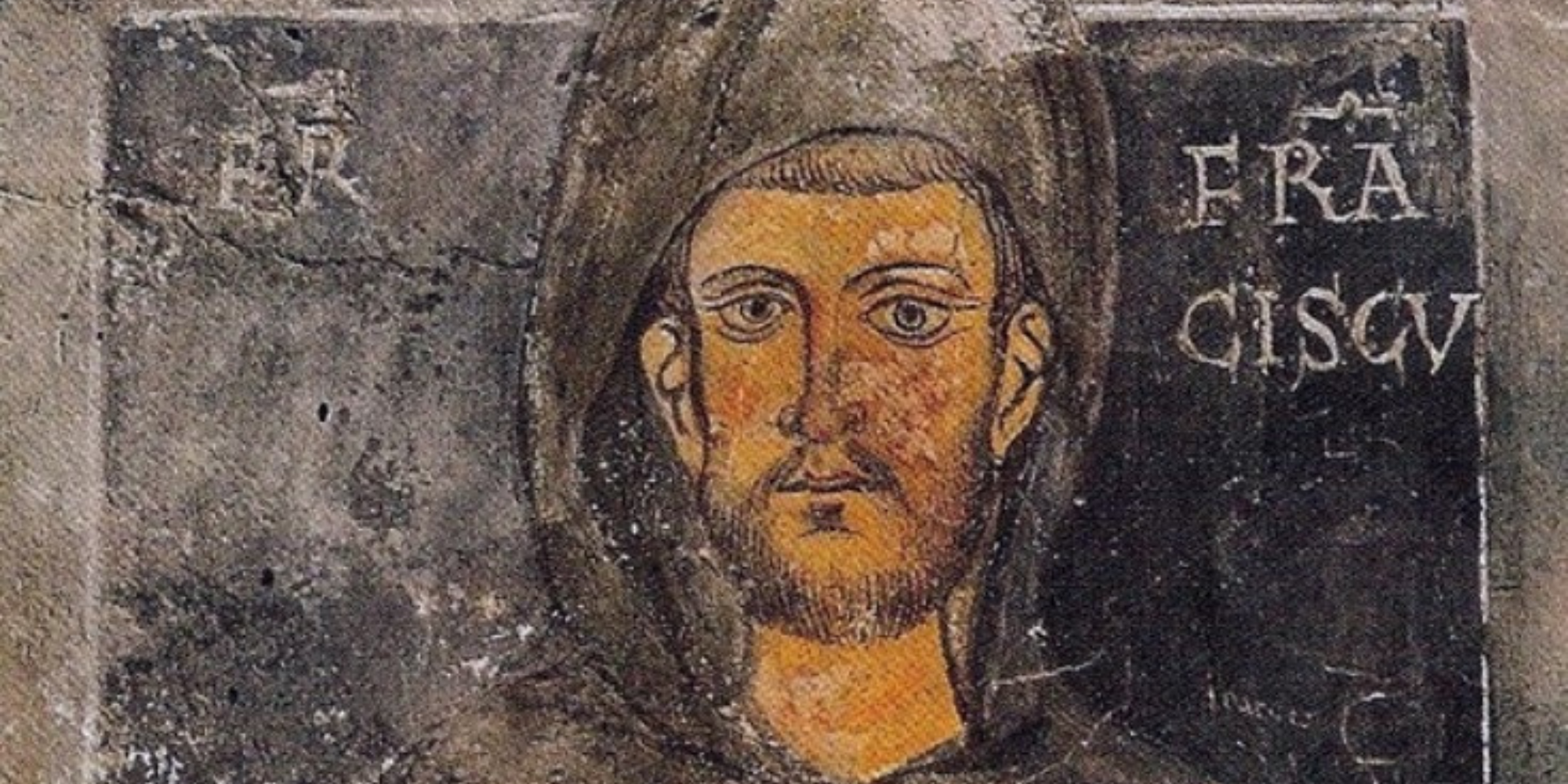
Image: The oldest portrait of St. Francis, a mural painting in the sacred grotto “St. Benedict's Cave” in Subiaco.