
A Franciscan View: A perceived fight between the pope and the president
“A Franciscan View” is a new series by the Province of Our Lady of Guadalupe’s Office of Justice, Peace, and Integrity of Creation to help you reflect on the news through a Franciscan lens. Our hope is that you will not only watch the news — you will be transformed by it to become a witness of God’s peace and justice in our world today.
The story
Over the past month, the news media, including much of the Catholic media, has presented a story that Pope Leo XIV and many U.S. bishops are in a full media fight with President Trump and his administration. Unfortunately, this framing, the pope vs. the president, suggests that this is a unique event and a new level of conflict in our world.
A little context
Throughout much of the late 20th century and now 21st century, popes and bishops have been consistent in their calls for peace and the ending of other injustices. Rarely, including now, are these Church leader statements directed towards one person, or a president only.
What is unique now is the level and volume of response from the U.S. president and his administration. In the past, any disagreement was measured or ignored. Furthermore, the U.S. media may simply be paying more attention to Pope Leo’s statements because they are in English without translation, thus amplifying the perceived “fight.”
Impact of the focus on the fight—why this matters
Focusing on the fight as the story, the message of both parties gets ignored, which might be the goal of some people. The Church’s language on Just War or immigration and the U.S. administration’s language calling for conflict or deportation are never brought into dialogue.
The Church has long seen an important part of its role as respecting secular authorities while bringing moral insights to the conversation. Pope Leo has been clear from the beginning that his statements are not directed or designed to have conflict with the U.S. administration. While the U.S. administration has been saying that the Church has no role to play in these matters.
The focus on the “fight” ignores and misses the opportunity to witness how to be a public faith leader. Pope Leo and the bishops, like their predecessors, are approaching this as pastoral leaders, offering guidance to those who will listen on how to bring faith into conversation with secular issues seeking to form a public moral conscience.
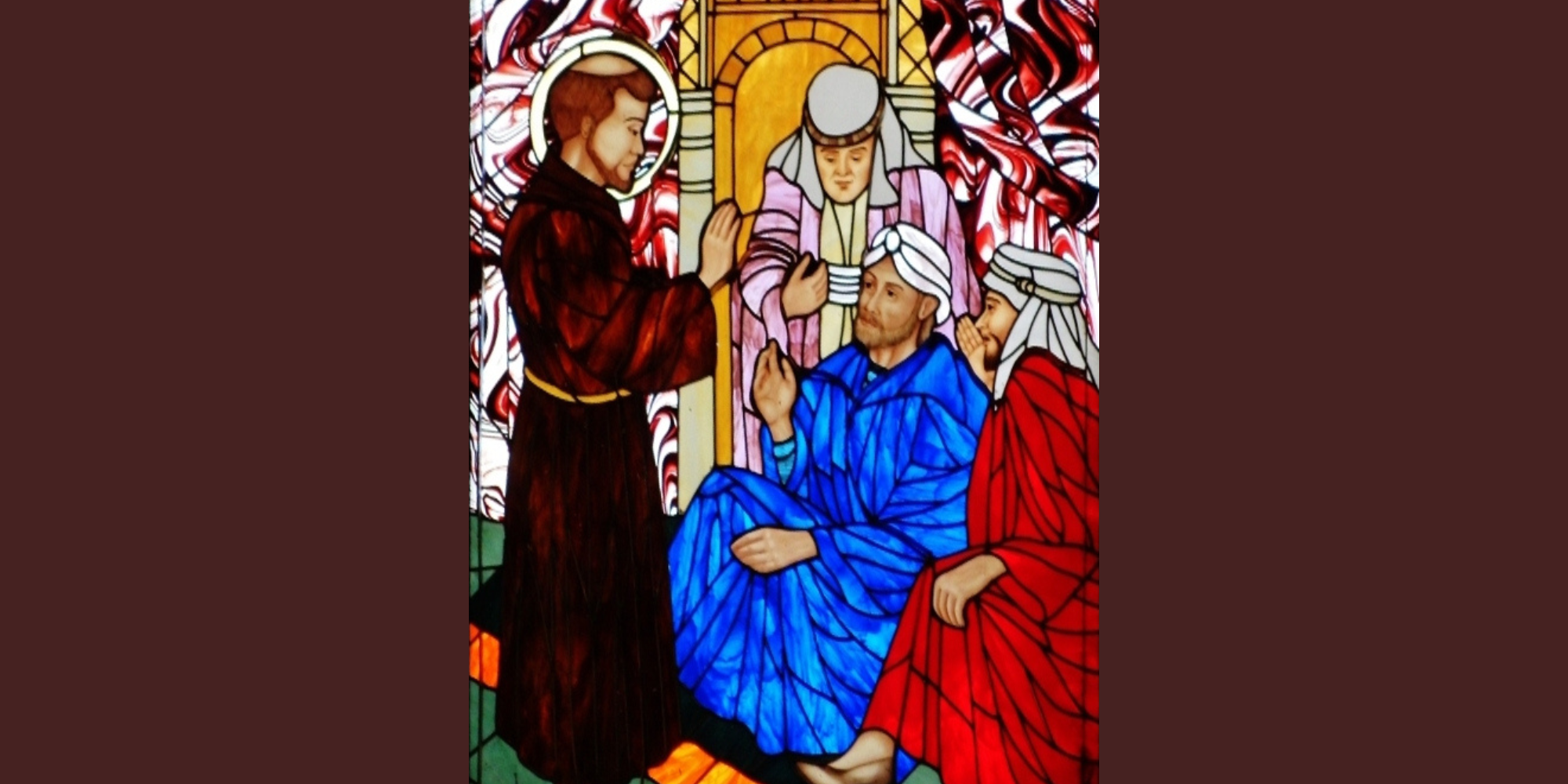
This image shows St. Francis of Assisi meeting a sultan during the Fifth Crusades in 1219. St. Francis aimed to end the war through dialogue rather than violence. Photo credit: Wikmedia Commons, Enrique López-Tamayo Biosca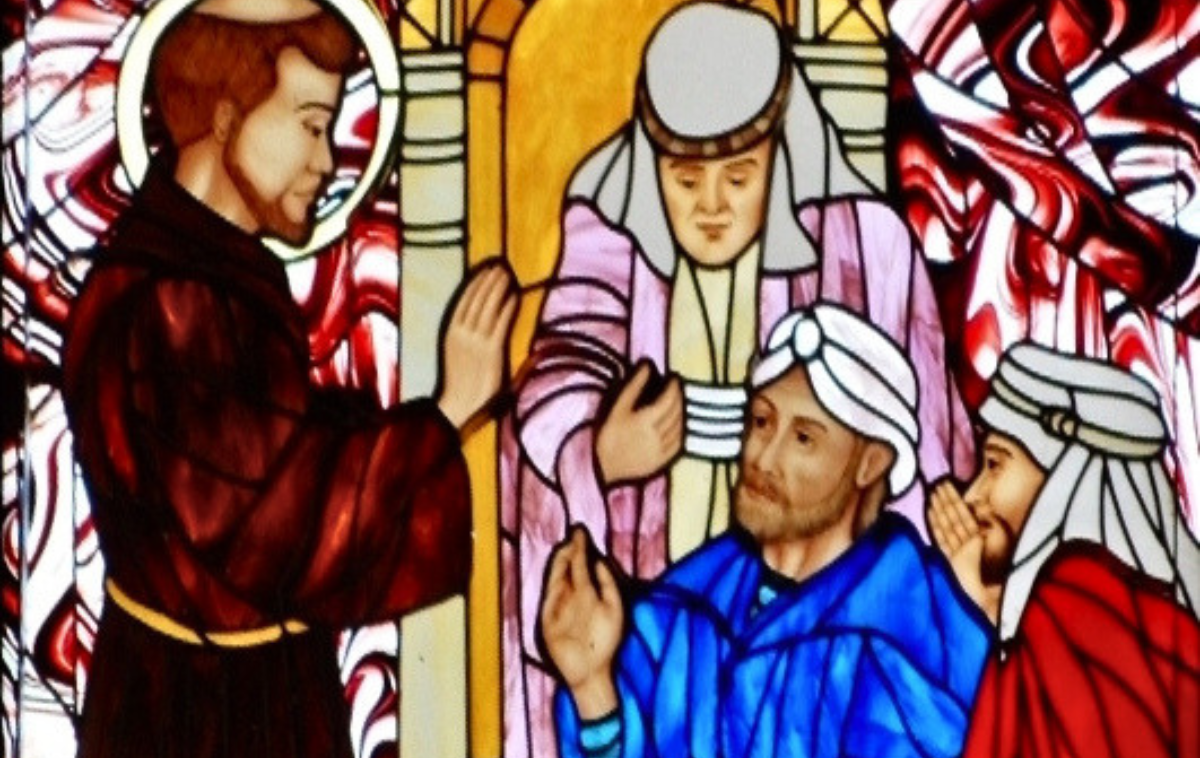
Our Franciscan witness
In 1220, Francis of Assisi wrote a “Letter to the Rulers of the Peoples.” In this letter, St. Francis encouraged the secular leaders of his time, primarily in Central Italy, to create the space where people can live out their faith. It represents a Middle Ages moral appeal to those outside of ecclesial structures by a public religious leader.
Francis of Assisi wrote this letter after he had returned from the experience of the Crusades, where he met the Sultan. In this experience, he witnessed Church and secular leaders not being very Christian in their treatment of each other and the Muslims, perhaps pushing him to invite leaders to a moral center. Furthermore, it is believed that at the time of this letter being written, St. Francis had already stepped down from direct leadership of the growing Franciscan movement. Yet, he still felt it was important to speak out to the public leaders. He was modeling the public performance aspect of public pastoral leadership even in his “diminished” role.
Conversation starters
As you observe this “fight” have you had conversations with others about it? What has been the content?
When and how have you found it helpful to give a public pastoral leadership message on secular issues? What kind of responses did you receive?
Do you think the “fight” over the competing statements makes your role as a public pastoral leader more difficult or easier?
How have you tried to bring “competing sides,” including one you might favor, into constructive dialogue?
Prayer
We pray to be an instrument of peace, where there is conflict, let me be an example of true dialogue. Lord, hear our prayer.