Healthy Tension: Christianity’s Role in a Diverse Democracy
The recent assassination of Charlie Kirk has once again exposed a tense divergence in American culture and politics, the latter not simply being policies but philosophies. On one hand, some abhor the man himself and what they claim he stood for, which they consider antithetical and dangerous in a pluralistic society. Others, including an increasing number of white males between the ages of 18 and 34, are embracing the tenets of Turning Point USA, which now includes 850 chapters on college campuses around the United States and whose mission is "to identify, educate, train, and organize students to promote the principles of freedom, free markets, and limited government.” In other words, use your vote to select the best candidate who espouses your ideology. Since 2020, evidence shows that Christian nationalism has moved from the fringes of American society to a more perceptible pulse in the mainstream of American politics and culture. However, the percentage of the U.S. population that adheres to or sympathizes with the ideology has remained relatively stable since late 2022.
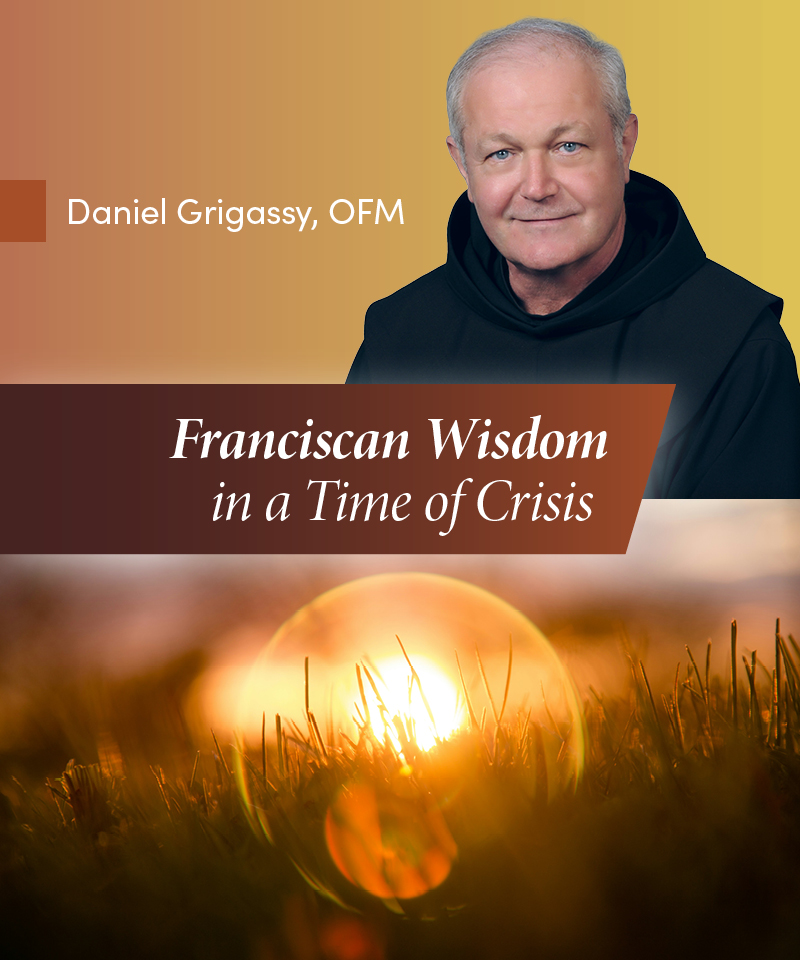
To be fully transparent, I consider myself more politically conservative. I personally believe in less government overreach, fiscal responsibility, and, as a Christian and friar minor, having the personal responsibility and freedom to respond to the social teachings of the Church, especially in service and outreach to the poor and disenfranchised. The framers of our Constitution, influenced by writers such as John Locke, William Blackstone, and Montesquieu, saw the wisdom of the separation of Church and state. As a Christian, the values of the Gospel form my outlook on life. As an American, voting in the political process allows me to choose a candidate who best expresses my concerns grounded in those Gospel values.
So, who and what are Christian nationalists?
It's more of a political ideology or worldview, and there is no formal political party in the U.S. with that name (although a fringe anti-Semite/segregationist group used the title in the 1940s).
Both adherents and sympathizers of Christian nationalism believe the United States was founded on Christian principles and therefore should be governed accordingly meaning public policy and civic life should be infused with Christian values, not secular or non-Christian alternatives; that mass, uncontrolled immigration is having a detrimental effect on our country (some believing it is replacing our cultural and ethnic identity), that DEI has undermined the value of merit, and the civility of our country can only be maintained by a strong policy of law-and-order, and parents, not the public education system, should determine what is taught to their children regarding human sexuality.
According to the Public Religion Research Institute's 2024 polling, 10% of Americans adhere to the core values of Christian National tenets, and 20% are sympathetic to them. Sixty-four percent of white evangelical Protestants are more inclined to accept Christian nationalist beliefs as either adherents or sympathizers, and demographically, tend to be more prevalent in the South and Midwest, are older, and are less likely to have a college education.
What is interesting relates to those who sit in the pews of our parishes on Sundays. Polls show that 7% of white Catholics are followers of Christian nationalism, and 21% are sympathetic. Among Hispanic Catholics, 7% are followers and 16% are sympathetic. Surprisingly, about 34% of African American adults sympathize with Christian nationalism, while few are strict adherents. And while only one politician – Rep. Marjorie Taylor Greene (R-GA) has publicly declared herself a Christian nationalist, many, particularly Republicans, are sympathetic and have adopted both policies and rhetoric that lean towards Christian nationalist ideology. The overwhelming majority of Christian nationalist adherents and sympathizers consider themselves to be on "the right," influenced by conservative outlets such as Newsmax, Fox, One America News Network (OANN), and the Daily Wire.
Christian nationalism has become influential in the contemporary Republican/MAGA movement: polls link it to support for Donald Trump, with about 20% of Republicans identifying as adherents and another 33% as supporters or sympathizers. The ideology is spreading in some local churches, notably the New Apostolic Reformation (NAR), a loose Pentecostal/charismatic network shaped by C. Peter Wagner, which promoted modern "apostles" and "prophets" and organized leaders in the 1990s. Wagner's mentorship helped channel parts of evangelical support toward Trump and the Jan. 6 insurrection. Coverage of Jan. 6 noted Christian symbols and clergy at the Capitol as evidence of Christian nationalism, but symbols alone don't prove shared ideology—some used imagery opportunistically, and many Christians condemned the attack.
The inevitability of reaction
First, we must ask ourselves, "How did America get to this point?" It would be naïve to think our country hasn't gone through periods of polarization in the past, or hyper-Christianized movements. Think of Puritan millennialism in the 17th century, or Christian republicanism during the American Revolution or later, Manifest Destiny in the 19th century. Often, populations were scapegoated by groups such as the Nativist (Know Nothing) party as America experienced a precipitous number of immigrants coming to its shores – and who were largely Catholic. The demographic complexion of America was surely changing.
The "Silent Generation" and "Baby Boomers" witnessed a cultural shift beginning in the late Sixties. It was marked by the rise of a counterculture embraced by young Americans that challenged traditional values and institutions, fueled by movements like the Civil Rights Movement and the growing push for feminism. There was widespread social change, characterized by youth-driven protests, a rejection of authority, both political and religious, along with expressions in music, fashion, and lifestyle centering on individualism. This led to increased sexual freedom as birth control and legalized abortion became more available. Yet there were enough of the "old guard" who could affect policy, as the Silent Generation still wielded its voting power.
Fast forward to the new millennium, and we began to see both policy and philosophy change. Traditional Christianity and its various denominations, whose influence was slowly waning since the late Sixties, was being abandoned by both Generation X and Millennials. Liberal policies and laws supporting abortion, gay marriage, an inclusive range of sexual identity, transgenderism, and DEI were supported by a tech-savvy, multi-cultural younger generation now wielding its political power and, according to the PEW research, tended to be more left-leaning. Tucker Carlson’s book Ship of Fools rightly criticized the right’s political leadership for prioritizing self-gain over ordinary citizens, while criticizing the left for attacking constitutional rights like the Second Amendment and overriding parental authority in schools, especially when teaching about human sexuality. For conservatives, the election of Donald Trump in 2016 was not so much an endorsement of Trump himself, but "the throbbing middle finger in the face of America's ruling class as a symptom of rage." That rage erupted in the 2024 election.
Philosophically, moral relativism, asserting that moral standards are culturally defined and therefore there are no universal or absolute set of moral principles, had taken a foothold in both European and North American culture, decried by both Popes John Paul II and Benedict XVI. While John Paul II often spoke out against moral relativism, Pope Benedict XVI viewed the decline of Christianity in Europe as a crisis stemming from the "eclipse of God" caused by secular ideologies, moral relativism, and a disconnect from the continent's Christian roots. This was echoed by Msgr. John Shea in his book From Christendom to Apostolic Mission, who notes the decline of Christianity in America by framing it as a shift from "Christendom" to a new "apostolic age" of post-Christendom.
These cultural, political and philosophical shifts in American are the key factors for the rise in Christian nationalism.
So, how do we as Franciscans respond to this polarization and tension within our country?
Examples of Franciscan praxis, starting with our founder
First, we need to stop putting labels and categories on people and listen respectfully to others who have a differing point of view. As Franciscans, we are called to be peacemakers and bridgebuilders. When Francis met Sultan Malik al-Kāmil in 1219 during the Fifth Crusade, he was resolute in his conviction as a Christian – just as al-Kāmil was in his Islamic faith. We know something good came out of their exchange regarding their respective faiths, both standing against the tide of hostility and indifference from some of their religious counterparts such as Cardinal Pelagius or the muftis giving counsel to al-Kāmil. While both men remained true to their faiths, they engaged respectfully. Francis's humility and non‑judgment, along with al-Kāmil's sincerity in learning and sharing, opened a sincere dialogue that ended in mutual respect and a shared focus on God, prayer, and the dignity of the other.
Do we allow an exchange of ideas even within our friaries, or become so partisan as to negate any differences of ideas? Many times I have visited friaries only to hear one sided opinions and critical statements against conservative policies and politicians without any thought of "there may be other ideas out there." Not all left leaning people are Marxist, radical pro-abortion, easy on crime, gender dysphoric, open border and "government should take care of every social ill" proponents. Nor are all right leaning people white supremacists, homophobic, misogynistic, opposed to immigration, anti-transgender and radical laissez faire capitalists. Most Americans are center leaning, simply wanting to have opportunities that enhance their lives and that of their families. Honest, respectful dialogue, with an honest attempt to respect the other’s dignity while listening to their position can yield compromise for the common good. Political life is organic—the Constitution has been amended 27 times—so thoughtful change and engagement belong to our civic tradition.
Know the facts, avoid the hype (or spin)
As Franciscans, we need to know the objective facts before laying out our case in a plausible and salient way. I confess, I knew of Charlie Kirk but not much about the man or what he stood for. I began to research what his detractors claimed he said by checking non-partisan websites such as FactCheck.org or politifact.com. It was interesting to learn what Kirk really said as opposed to what others claimed he said.
Having earned an undergrad in Journalism, I am appalled the fourth estate has morphed from a once respected, objective medium simply presenting the facts to becoming more of an influencer. While news sources such as Fox or Newsmax present a conservative side, a recent poll of journalists by the University of Syracuse found that 36% identified as Democrats, while only 3.4% identified as Republicans. The majority (52%) claimed to be Independents. Yet a recent PEW study also noted most Republicans do not trust major news outlets based on their perception of a bias towards Democratic policies. During Trump's first administration, after watching a number of his speeches, I was stunned how various news sources would edit them, creating the spin favorable to their political alignment. As I've told my nieces attending college, "be informed, not influenced."
As Franciscans, we should be publicly non-partisan
We may not like a current political party and their ideals, or certain politicians. We certainly have that right. But if we are publicly partisan, it means we are taking a side. As Franciscans, we are public representatives of the Church. No single political party or partisan organization holds the market on the Gospel or JPIC agendas. To critique public policy in light of the Gospel is one thing, but to show favoritism to a particular political party in a public forum is antithetical to who we are as Franciscans being bridgebuilders. St. Paul reminds us in 1 Timothy 2:1-2 that "petitions, prayers, intercession and thanksgiving be made for all people—for kings and all those in authority, that we may live peaceful and quiet lives in all godliness and holiness". Let's not forget the despotic emperor, Nero, ruled at the time Paul wrote that line. And emperors were not voted in – or voted out!
Our Franciscan intellectual tradition might provide some insights
Two of our Franciscan brothers, William of Ockham and John Duns Scotus, both highly influential philosophers during the medieval period, might give us more clarity. While their philosophical approaches differed (William Ockham is known for nominalism, methodological parsimony (Occam's razor), and a sharper critique of authority; Scotus for subtle metaphysical realism (haecceity, formal distinction), a strong affirmation of individual dignity, and a careful balance of will and intellect) here is what one might deduce:
Both Ockham and Scotus provide a robust framework for balancing individual dignity, social order, and moral conviction in public life. Ockham anchors his thought in legal protections and empirical clarity, opposing coercive religious-political fusion. Scotus centers on the inherent dignity of persons and the pursuit of a common good rooted in human nature, calling for compassionate yet orderly responses in law and policy. Together, their perspectives caution against ideological excesses while affirming the vital role of moral convictions that respect justice, liberty, and community.
Conclusion
The difficulty concerning Christian nationalism is this: whose brand of Christianity are we talking about? There's no doubt Catholicism, despite its rich philosophical and moral teachings, is still held in suspicion by some Christians. Christians can't even agree among themselves on critical social issues such as abortion! While Christianity furnished the strongest internal critiques of American social policy such as abolitionist theology, Christian social justice movements, and the Civil Rights Movement, American history has also been marred by groups waving the banner of Christianity despite their views being contrary to the Gospel (Manifest Destiny and the removal of indigenous peoples, the KKK and segregationist churches, or recently the radically violent, anti-abortion group, Army of God).
As Franciscans, we have the Gospels as well as our rich intellectual heritage that can help us not only navigate but influence America's social and political construct. History is our best teacher. America has gone through turbulent stages (think of the horror of slavery or the anarchists' movements in the early 20th century) – and despite the turmoil within our country, the pendulum has gradually settled back to the center. That is why, as a Christian and American, I am always hopeful. Our founders were right to ensure a separation of Church and state that creates a healthy tension without domination, that everyone should have something to say in a pluralistic and democratic society, and that in agreeing to disagree at times, we can work together for the common good.
.jpg?sfvrsn=91ac0e1d_1)