
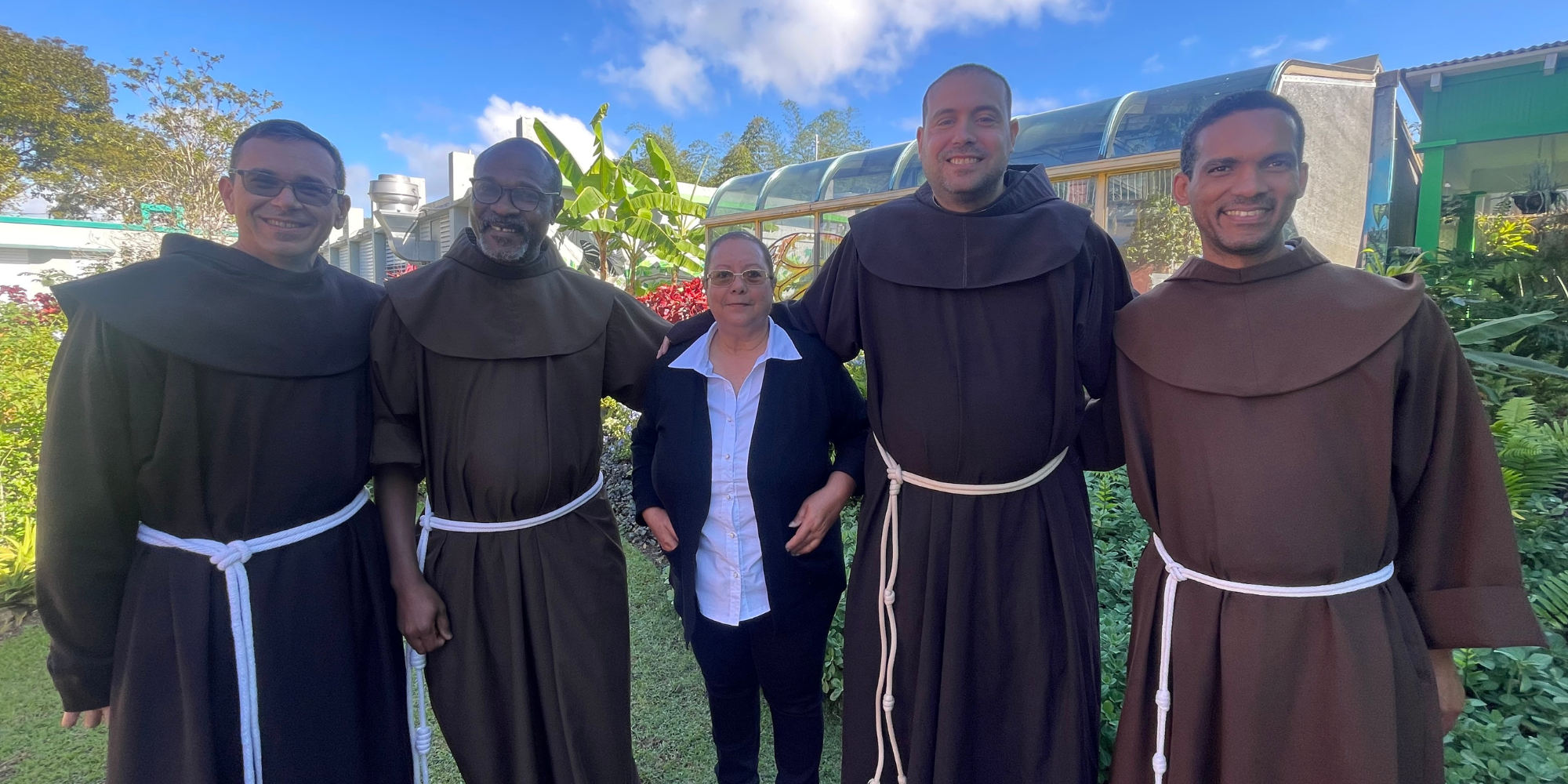
Friars embrace Spanish in Puerto Rico immersion program
For Franciscan friars, learning a language is a practice of presence, humility and relationship. This vision led to an immersion program in Puerto Rico for Brothers James La Grutta, OFM, and Ciduoane Joseph, OFM, who recently completed hands-on preparation for future Spanish language ministry.
The ongoing formation program, offered by the province’s Office of Renewal, was designed for friars who want to improve their Spanish while experiencing the cultural context in which the language lives.
The immersion was conceived not just as language study, but as a holistic experience of fraternity, culture and mission. In many ways, it functioned as shared discernment – a period for solemnly professed friars to walk together, deepen their cultural awareness and renew their call to live the Gospel through missionary presence.
“Language isolated from its cultural context is limited at best,” said Br. Keith Warner, OFM, who helped develop the program. “This immersive experience makes sense in the context of missionaries of the Gospel.”
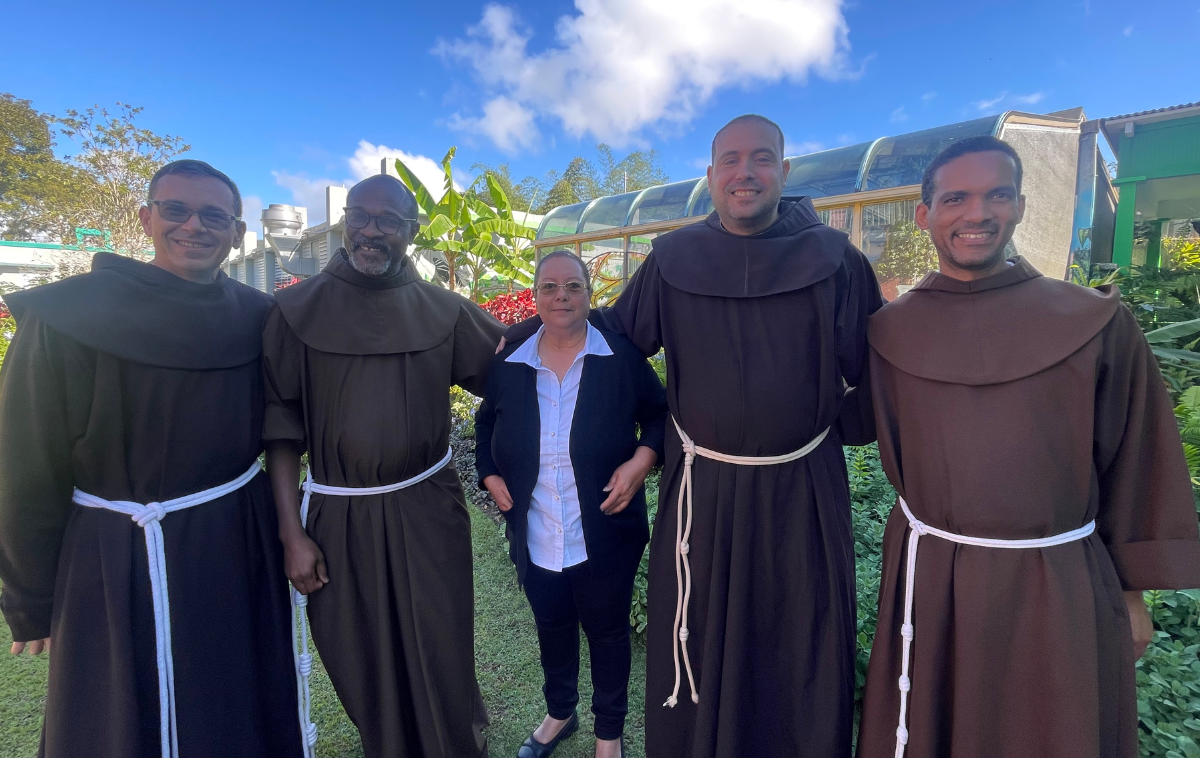
Br. Ciduoane Joseph, OFM (second from left), and Br. James La Grutta, OFM (fourth from left), visited Casa Pueblo, a secular foundation focused on environmental protection, community growth and solar energy. Br. James stressed the need to prioritize Spanish for their Order and the global future, while promoting fraternity. (Photo courtesy of Br. James)
Learning through patience and presence
For Br. Cidouane, the immersion had a clear and deeply pastoral purpose.
“My hope was simple: to be able to celebrate Mass in Spanish when I returned,” he said. Through daily prayer, conversation and ministry in Spanish-speaking communities, that hope became reality. “Thanks to the experience, I achieved that goal,” he said, adding that returning home able to celebrate Mass and hold conversations – even imperfectly – left him feeling grateful and confident.
Br. James’ decision to participate came from pastoral awareness and personal discernment.
“It started with wanting to improve my Spanish,” he said. “I think it’s important for the future of our world and for our Order that Spanish be a priority, while also living in fraternity with other brothers.”
During phase one of the program, Brothers James and Ciduoane lived at St. Joseph the Worker Friary and Parish in Sabana Seca, in the town of Toa Baja. Their weeks blended Spanish classes with pastoral service and engagement at Niños de Nueva Esperanza, a social project started by the friars to support local children and families.
Br. James characterized the experience as formative, not just educational.
“It’s more than just learning Spanish,” he said. “It’s learning about the culture—and learning patience along the way.”
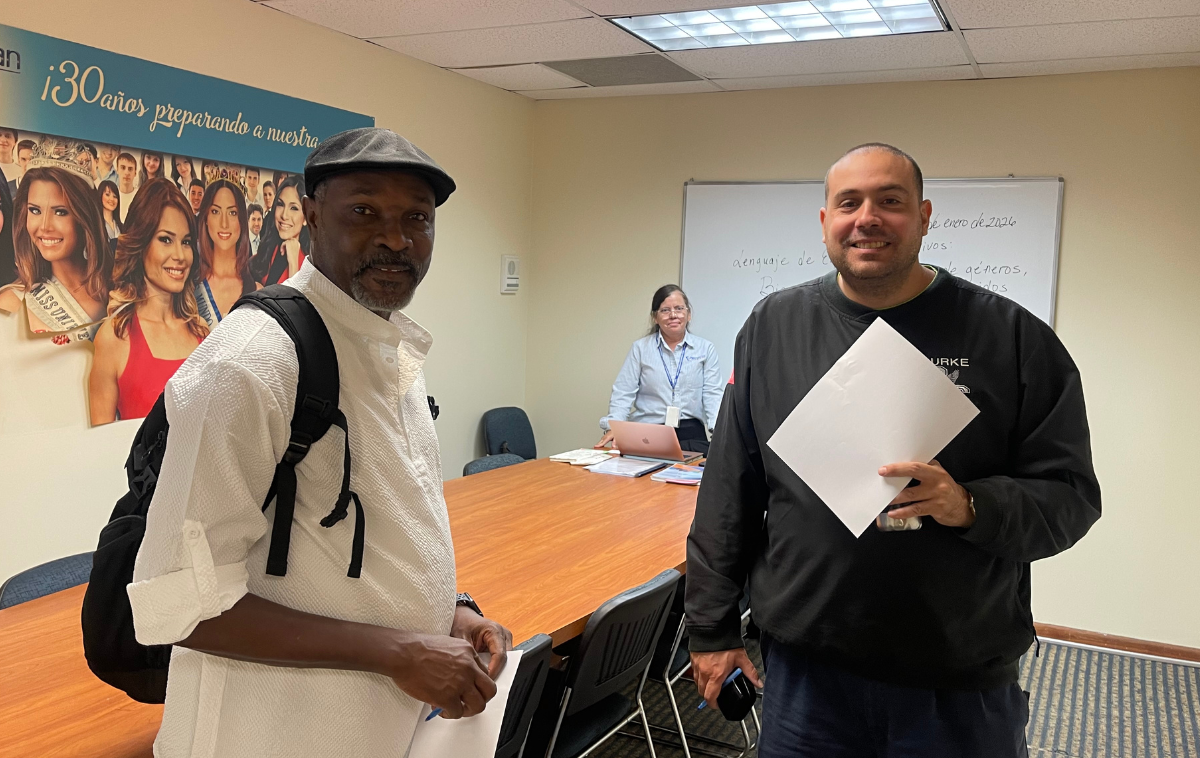
Brothers Ciduoane Joseph, OFM (left), and James La Grutta, OFM, took a language class in their program. Br. James described the classroom as "a little less intensive," noting that "the immersion is more real-world." (Photo courtesy of Br. James)
From classroom to real world ministry
Br. James had studied Spanish before in a classroom setting, but he said the immersion learning offered a broader perspective.
“The classroom experience was a little less intensive,” he said. “The immersion is more real-world. That’s how I would describe it.”
Ordering food, participating in Spanish liturgies and handling everyday conversations became opportunities for growth. Br. James was careful not to overstate results, describing steady improvement rather than sudden fluency.
“My Spanish is a little bit better than when I left,” he said, “but I’ve still got a way to go.”
That candid assessment reflects the program’s intent: formation for ministry is gradual, relational and rooted in lived encounter.
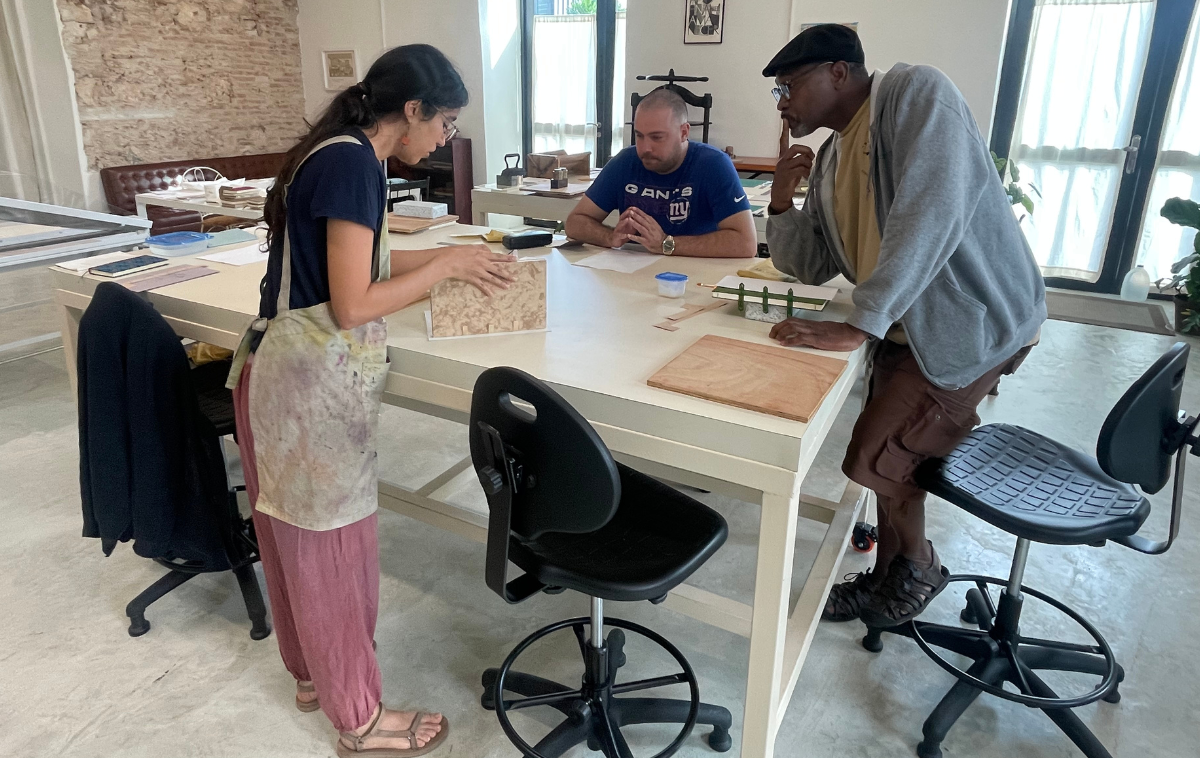
Brothers James (left) and Ciduoane attended a book-binding class in Puerto Rico. The friars maintained their commitment to pastoral work by collaborating with the local parish on weekends, continuing their engagement with the community in a new location. (Photo courtesy of Br. James)
Creation, community and Franciscan values
The program’s final phase took the friars to the mountainous town of Adjuntas, where they spent time at Casa Pueblo, a secular foundation dedicated to environmental preservation, community development and solar energy initiatives.
Casa Pueblo’s mission closely aligns with Franciscan spirituality, particularly to care for creation while in solidarity with local communities. The friars also collaborated with the community parish on weekends, continuing pastoral engagement in a new place.
Br. Fandry Sosa Ayala, OFM, a program supervisor, underscored that the experience is deliberately holistic – cultural, pastoral and fraternal.
“The purpose is to help the friars know the culture, work with the people, and learn the language,” he said.
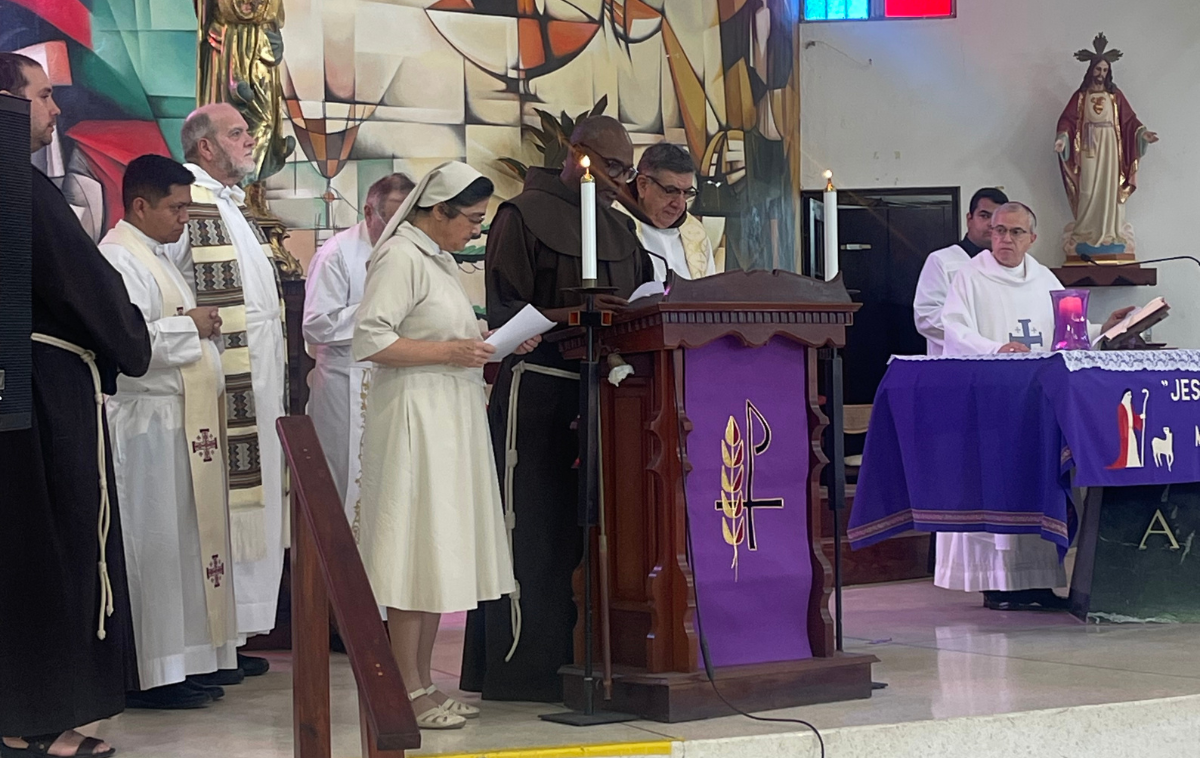
Br. James (far left) and Br. Cid (at the altar, both in habits) joined a Mass with Archbishop Roberto González, OFM, of San Juan, Puerto Rico. They later attended a regional meeting held in Spanish, which tested and affirmed their immersion learning. (Photo courtesy of Br. James)
Preparing friars for a multilingual future
As their immersion ended, both brothers attended a regional meeting in Puerto Rico held in Spanish with 23 friars from the U.S., Cuba and Puerto Rico. The event tested and confirmed their language skills.
The program prepares friars for Spanish language ministry by focusing on presence, humility and living the Gospel with those they serve, rather than offering a speed course.
Br. Cid is optimistic about similar immersion experiences. He mentioned locations including Mexico, the Dominican Republic, Colombia, Guatemala, El Salvador and Cuba, as well as any friary or parish where Spanish is spoken regularly. The key, he says, is joining a community that supports the goal and accompanies the friars throughout their journey.
The experience raised broader questions about immersion's impact on ministry. Br. James found the lasting lesson was spiritual, rather than linguistic.
“The big thing is being patient with the experience,” he said, “and realizing it’s not going to be exactly as we expect. There will be high points, low points, frustrations – but it’s worth pursuing.”
If you are a friar interested in participating in a future missionary and language immersion in Puerto Rico, please contact Br. Keith Warner, OFM.