Born of the Same Spirit: A Friar Reflects on His Service to Our Sisters
[Blessed Francis] firmly promised them,
and others who professed poverty in a similar way of life,
that he and his brothers would perpetually offer them help and advice.
And he carried this out carefully as long as he lived,
and when he was close to death
he commanded it to be carried out without fail always, saying that
one and the same Spirit
had led the brothers and those little poor ladies out of this world.
(2 Celano, 204/CA:ED, 417)
“Do you like Poor Clares?”
“Yes, of course I do. Who doesn’t like Poor Clares?” Little did I know that that yes to my provincial minister’s question would change the direction of my ministerial life and in the process, enrich my life as a Friar Minor beyond measure.
A Challenging Call
Poor Clares have been part of my life since postulancy, and I have been blessed with their friendship for many years. So, it was a privilege when my minister asked whether he might nominate me to serve their federation as its religious assistant—even more so when the sisters themselves recommended me to the Holy See, which then appointed me. At the same time, I must confess that I found the prospect of so serving them a bit daunting.
Setting aside the question of the Holy See’s expectations, as a religious assistant I would help us brothers to keep the promise Francis himself had made to Clare and her sisters. How would I even begin to do that? As I soon realized, it would be by leaning into our common vocation’s defining characteristics of fraternitas and minoritas.
The Gift of Fraternitas
Francis and Clare shared the same conviction: that brother-/sisterhood, i.e., fraternitas, was a gift from God. It was a defining characteristic of their Gospel-life. Indeed, it was the very context within which they grew to understand what that life demanded of them.
We remember well Francis’ recollection of the gift of fraternitas “After the Lord gave me some brothers, no one showed me what I had to do, but the Most High Himself revealed to me that I should live according to the pattern of the holy Gospel (Test, 14; FA:ED I, 125).” We ought to remember Clare’s reception that gift, as well. It reveals the bond she and her sisters enjoyed with Francis and his brothers in their common observance of “the Holy Gospel of Our Lord Jesus Christ (LR I, 1 & FLCl I. 1; FA:ED I, 100 & CA:ED, 109).” That bond is our inheritance. We, sisters and brothers together, are called to embody it today.
After the most heavenly Father saw fit in mercy and grace to enlighten my heart that I might do penance according to the example and teaching of our most blessed father Francis, a short while after his conversion, I, together with a few sisters whom the Lord had given me after my own conversion, willingly promised him obedience, as the Lord gave us the light of His grace through his wonderful life and teaching (TestCl, 24-26; CA:ED, 61).
In response, Francis promised “for myself and for my brothers always to have the same loving care and special solicitude for you as for them (FLCl 4; CA:ED, 116).” In the truest sense, Francis’ word was that of a brother to the sisters the Lord had given him. That care and solicitude did not flow only one way. Francis himself received it from Clare and her sisters many times over —as would I, eight hundred years later. The fruit of our sisters’ love was a deeper appreciation for the gift of fraternitas in my life as a Friar Minor.
This Thanksgiving, I celebrated the one-year anniversary of an unexpected and lengthy hospital stay. I fell ill while visiting our sisters, and faithfully, every day for a month, a sister knocked on my door to visit with me, laugh with me, cry with me, pray with me. She did it not as an act of simple Christian charity, but as an incarnation of the fraternitas that is ours as sisters and brothers—albeit with the particular flavor of their life as Poor Clares.
I was blessed to serve brothers throughout our Order. I am filled with gratitude for our vocation and for the brothers who bequeathed it to us. We live the gift of fraternitas as men on the move, whose cloister is the world. Our sisters, though, live it in the cloister of the enclosure. That distinction makes a difference. Yes, the care and concern, the love and sense of mutual belonging that mark our life as brothers is the same our sisters share with one another. Yet as I have seen, the immediacy, intimacy, and constancy that characterize their daily life demands that they live fraternitas to a heightened degree. By doing so, our sisters give special witness to the fraternitas Francis called us, his brothers to live:
Wherever the brothers may be and meet one another, let them show that they are members of the same family. Let each one confidently make known his need to the other, for if a mother loves and cares for her son according to the flesh, how much more diligently must someone love and care for his brother according to the Spirit! When any brother falls sick, the other brothers must serve him as they would wish to be served themselves (LR VI, 7-9; FA:ED I, 103).
How to serve my sisters as their religious assistant? By leaning into the fraternitas that defines our evangelical vocation, no matter the cloister in which we live it. I pray that I am doing so for my sisters, just as I pray I am now doing it better for the brothers God gives me.
Minoritas’ Open Door
Francis and Clare were abundantly clear: ours is a particular kind of fraternitas. Our names say it all: Order of Friars Minor, Order of Poor Sisters.i Poor and simple, humble and approachable, non-possessive and generous. These and similar descriptives of our Gospel- fraternitas are captured well by a Latin word that we still hold dear: minoritas.
Minoritas. We find this word among the earliest Fontes Franciscani. In 1216, Bishop Jacques de Vitry sent a letter to friends in Liège describing a new religious movement that he had encountered during a journey through Umbria.
I found one consolation in those parts, nevertheless: many men and women, rich and worldly, after renouncing everything for Christ, fled the world. They are called Lesser Brothers [Fratres Minores] and Lesser Sisters [Sorores Minores]. They are held in great esteem by the Lord Pope and the cardinals. They do not occupy themselves with temporal affairs, but work each day with great desire and enthusiastic zeal to capture those souls who were perishing from the vanities of the world and to bring them along with them. They have already born much fruit through the grace of God and have converted many, so that whoever hears them then says ‘Come’ and one circle of hearers draws together (CA:ED, 428).
In my service to our Order, I met brothers doing amazing things. Their parishes were homes of welcome; their schools, communities of faith as well as of academic achievement; their missions, vibrant centers of evangelization. “Our ministry draws people to us,” they would often say. That was certainly true—but only to an extent. As I reflect upon those encounters, I am struck by how the things people said about our brothers echo the things I now hear people saying about our sisters. “I love to come here. I feel so welcomed!” “They always have time for me. I never feel like a burden.” “In church, I’d always felt like a failure, but they make me feel like I belong—like I’m their brother/sister.”
Yes, we do amazing work, but honestly, so do many other religious and clergy. Why do so many people come to us? Fundamentally, I believe it is for the same reason they seek out our sisters, who serve no parishes, staff no schools, run no missions. It is because the spirit of minoritas that forms our living of fraternitas touches the people we encounter. It opens doors to them, welcomes them, tells them that they belong—which they do, as sisters and brothers with whom we walk the path to God’s Kingdom.
Christ said that whatever we do for the least of His sisters and brothers, we do for Him (cf. Mt 25:40). So, we brothers do a great deal for them. The world is our cloister, after all. We must serve our neighbors , especially the most wounded among them (see Lk 10:37 & CCGG 93.1). In that desire to do good, though, our sisters’ living of minoritas reminds us (as it reminds me!) that the greatest good we can do for people is to open our lives to them—simply, humbly, generously. When we do that, the joy we have in Christ will touch their lives: the joy that comes from knowing that we are God’s beloved sons and daughters. Whatever else we do can only flow from that, if we wish to serve them as Friars Minor—as their lesser brothers.
A Wider World
One of the greatest blessings I have received in my friar-life has been the opportunity to live with brothers in other provinces. Those experiences not only enabled me to see my province with new eyes, but also to perceive the ties that bind us as “members of the same family,” as Francis would say. “No matter where you are, when you’re with friars, you’re home!” Through my travels, I came to know just how true those words are, and I am the richer for it.
My ministry as our sisters’ religious assistant as born like fruit. My Franciscan world has broadened, my appreciation of our particular charism as Friars Minor has deepened, and I have felt the ties that bind us to the wider Franciscan family become even tighter—especially with the sisters with whom we share our vocation. The context in which we “observe the Holy Gospel” might differ, but the fraternitas and minoritas that characterize that life are one and the same.
Of course, a brother does not need to be a religious assistant to harvest in the richness of that experience. He only needs to walk through the door of any of our sisters’ monasteries, as two brothers recently discovered.
One brother had been taking a break from ministry in one of their monasteries. After a few days, a light clicked on: “I was sitting at lunch with the sisters, eating and chatting away—like I usually do. Suddenly, I found myself unconsciously substituting the sisters’ faces with the faces of some of the friars I live with. Then, it hit me: they’re just like us—God, help them!” He erupted in laughter! Then, he shook his head and leaned forward to underscore what he had just said: “Seriously, they really are just like us.”
Our second brother’s story was different. He had been participating in a meeting of friars and sisters—at the “invitation” of his provincial minister. He had never entered a Poor Clare monastery before, and he did not understand why he had to do so now. To talk about their common vocation? Clares were contemplatives. Friars did ministry. What was common about that? As the day went on, the arms he had wound across his chest loosened and opened. He began to listen. When it was over, the abbess asked him, “So, did you enjoy your day with us?” He looked her in the eye and shook his head. She wondered what was coming. Then said with his own sense of wonder, “Why didn’t anyone ever tell me I had sisters?”
Of course, he had met sisters before—plenty of them: sisters of the Third Order Regular, who ministered in his parishes; sisters of the Secular Franciscan Order, whose fraternity met in the church hall. In a word, he had only met sisters with whom he shared a commitment to public ministry, but he had never met Poor Clares—sisters with whom he thought he had nothing in common, only to discover that it was with them that he had the most profound bond. They were born of the same Spirit, and that made all the difference.
So, to anyone reading this reflection, especially my brother friars, I invite you to go, knock on a monastery door. Meet your sisters. Pray with them. Share a meal with them. Laugh with them. Open your heart to them. I promise that what you will discover—if you have not done so already—will expand your world and enrich your life beyond measure.
* * *
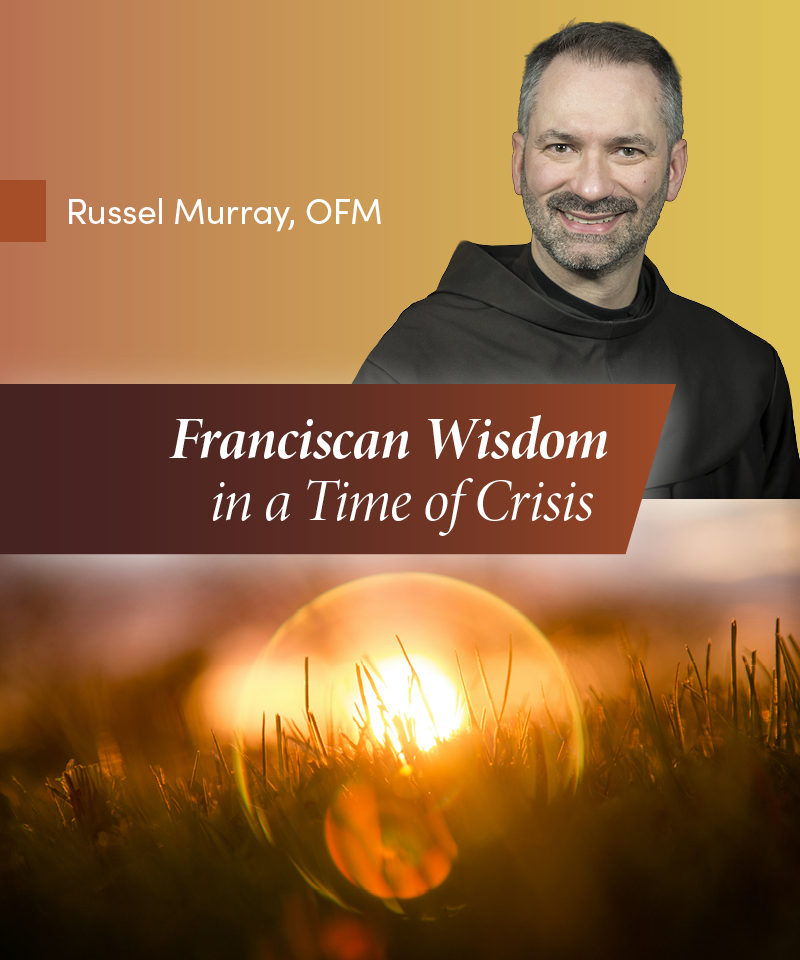
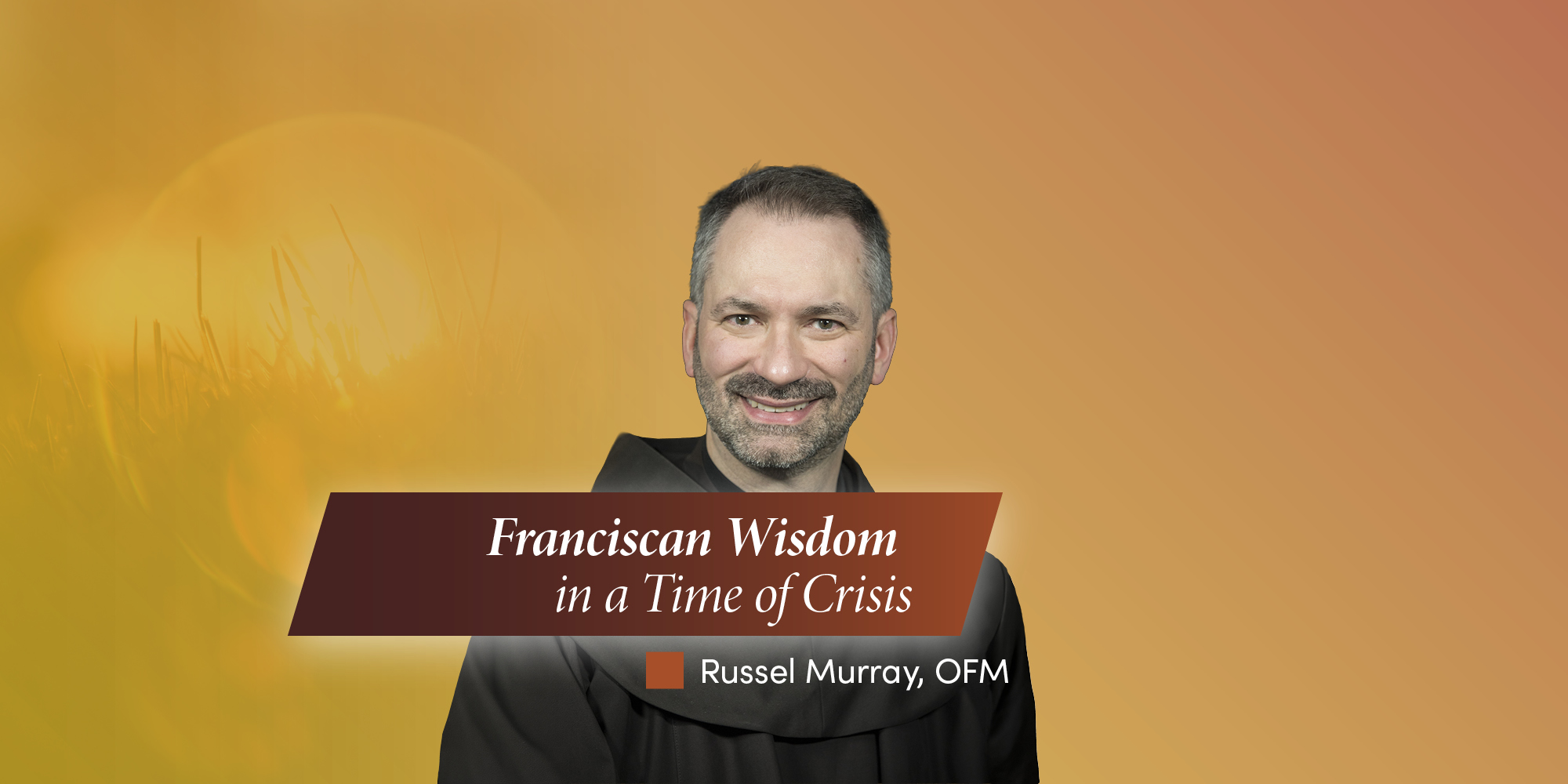
Br. Russel serves as religious assistant to Holy Name Federation of Poor Clares. Anyone wishing to visit the sisters may contact him for the addresses of their eleven monasteries, as well as for the addresses of the twenty-two other monasteries across the United States.
.jpg?sfvrsn=91ac0e1d_1)