
Brother John built faith and community with his hands
Reared in the modest steel town of Shelby, Ohio, Br. John Friebel, OFM, 85, never found inspiration in the pursuit of academic accolades or the confines of scholarly halls.
Rather, his spirit soared beneath the vast skies of his native Ohio and the desert southwest, where he discovered his deepest connection to God in hands-on work and the simple beauty of practical labor.
'That was me’
Br. John chose to become a Franciscan friar because he yearned for a life grounded in service and faith. When he first inquired about a Franciscan vocation, the person who reviewed his application noted concerns over his academics and lack of language studies but also provided a pamphlet for the Hands for Christ program for those inclined toward physical work.
“When I read that, that was me,” he said.
He began a nine-month Latin course at Duns Scotus in Boston, but after three hard months, Br. John quit to enroll in the Brothers’ School of the legacy St. John the Baptist Province in Oldenburg, Indiana. He was received into the Order of Friars Minor on Feb. 14, 1963, saying, “I'm a little Valentine to the Order.” Attending the Brothers School satisfied his desire to work with his hands for the glory of God.
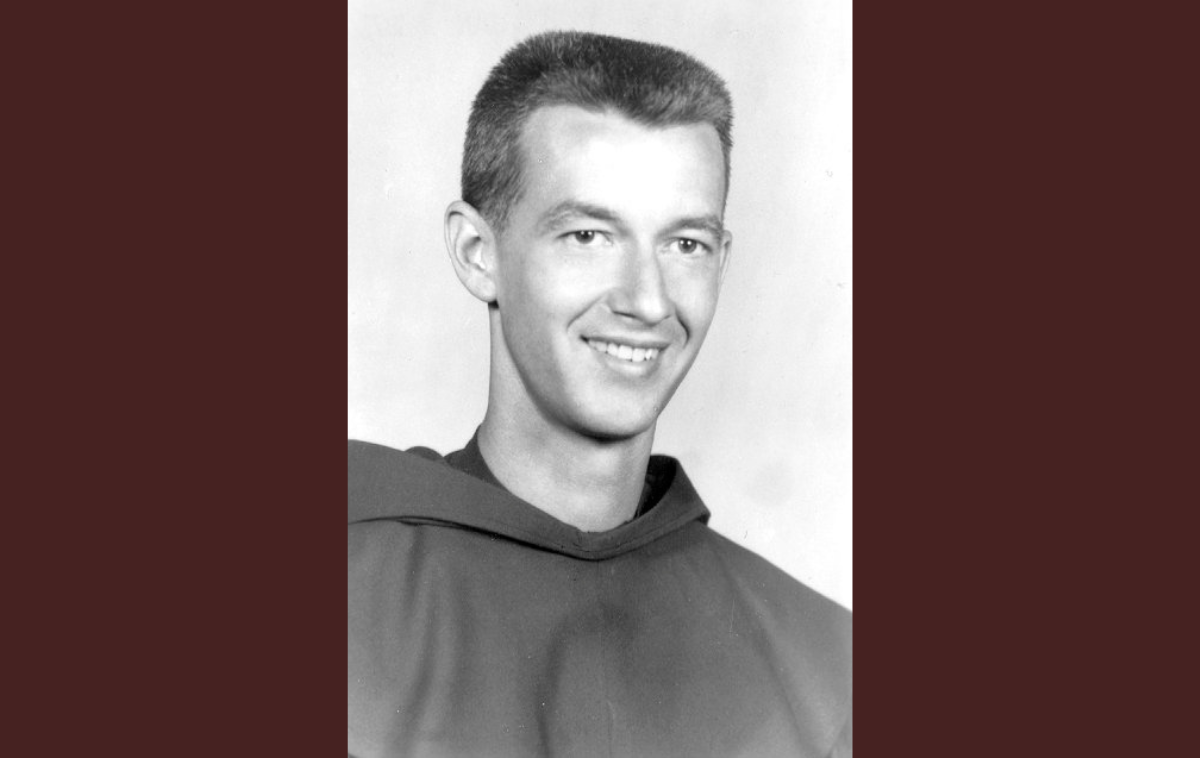
Then and now: Left, Br. John Friebel, OFM, not smiling about his latest report card. More likely, he was thinking about masonry and working in God’s great outdoors. Right, John today boasts of still having the same haircut. (Province of Our Lady of Guadalupe Archives Collection photo)
Serving in the Navajo Nation
Br. John effortlessly recalls details of his masonry work in Arizona and New Mexico, including plans and locations. For years, he built church structures with enthusiasm, following the model of Francis, who heeded God’s call to construct and restore buildings needed for His work, and later for service for men serving in the Order of Friars Minor that Francis would establish.
Br. John spent 54 years working on projects in the Navajo Nation, including a gymnasium, parish halls and churches, each with its own challenges and successes, all based out of historic St. Michael’s Mission near Window Rock, Arizona.
In the 1970s, Tuba City, Arizona, a 2-and-a-half-hour drive from St. Michael’s Mission, served as a vital community hub for the Navajo people and the friars who served in the region. With St. Michael’s Mission as home base, Br. John worked with eight friars, applying his masonry skills to sites in a broad region of Arizona and New Mexico.
“It was a delightful experience,” he said. “I got to lay all the blocks.”
In Shiprock, New Mexico, Br. John helped construct Christ the King Church with a team of friars and volunteers, laying its foundation. The friary, built to house three friars, features a basement with a dining room, kitchen and recreation room.
The project taught Br. John and his team an enduring lesson.

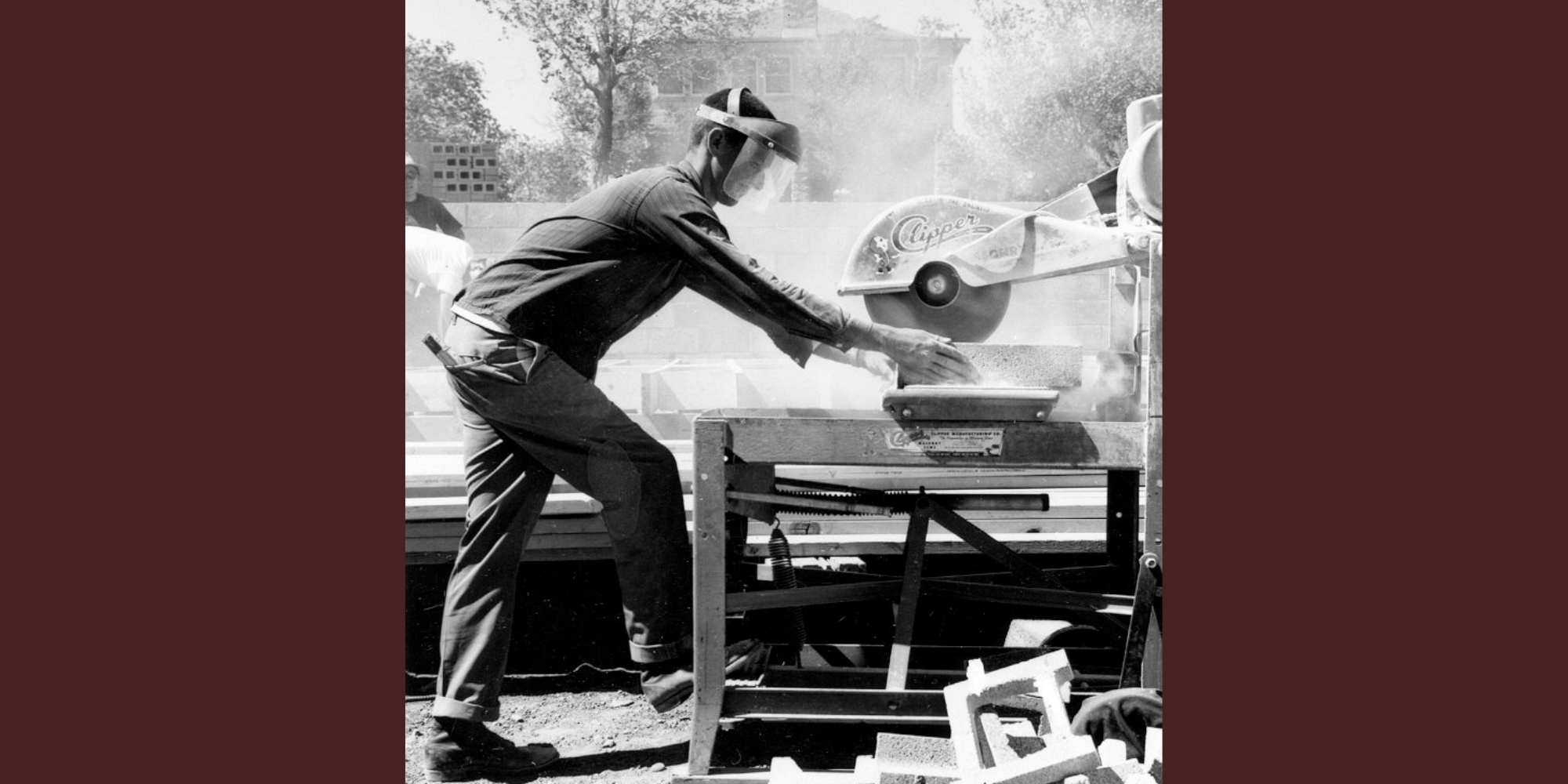
Of all the beautiful and reliable buildings Br. John Friebel, OFM, had a hand in, perhaps the one he learned most from, which crumbled and fell into the wash 30 years after construction. “I don’t know what we learned by our mistakes,” he says today, “but they have a double-wide (trailer) there now.” Here, Br. John saws wood for construction. (Province of Our Lady of Guadalupe Archives Collection photo)
A ‘little faulty building’
The friars unknowingly placed the church on unstable fill from a power plant. After 30 years, it started to sink, so the pastor had it demolished.
“That was a little faulty building that we built in ‘73,” Br. John can say with some humor today. “They have a double-wide (trailer) there now.”
Br. John lived 23 years at St. Michael Friary, working with a Navajo man on construction projects, from new buildings to reconstruction and maintenance, including installing showers and extra space to accommodate more people in structures, most of which are still in use today.
Br. John satisfied his love of working the land in other ways, too. He grew crops on an acre at St. Michael’s Mission and shared them with his community. He also took up beekeeping and fondly remembers sharing honey and produce.
“The garden would produce many things,” he said. “I would freeze up, can up, share, give away, much of the produce. One year, I made 160 gallons of dill pickles. And a fair amount of sauerkraut, about a 30-gallon container, and honey. That was part of my handiwork.”
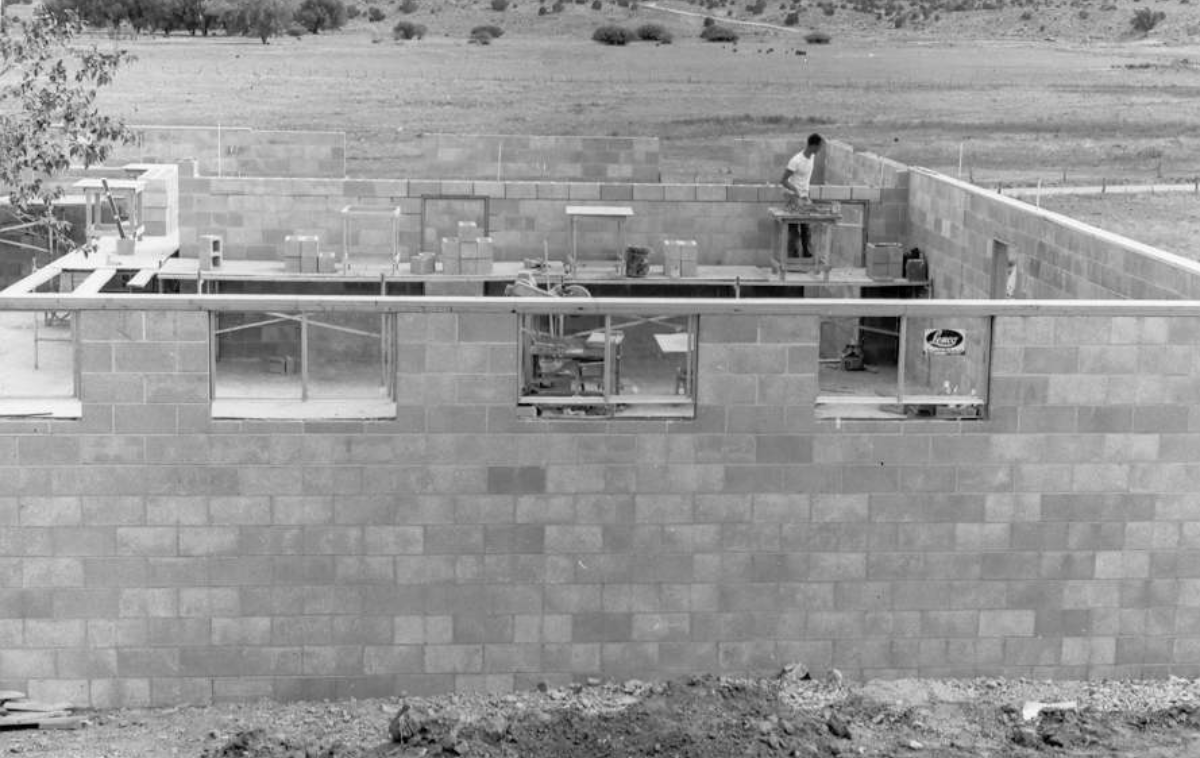
Just let him build. Here, Br. John Friebel, OFM, does what God called him to do. “Why did the Lord choose me?” He asks. “I don’t know. But I loved working with my hands.” (Province of Our Lady of Guadalupe Archives Collection photo)
‘I loved working with my hands’
Br. John was the final friar to leave St. Michael’s Mission and its stone-built friary on June 11, 2023, and although it was difficult, he remained grateful for his experiences and work with his brothers there.
“That’s me: Hands for Christ,” he says, working invisible soil. “As I tell people today, if I had to do it over again today, I would do it the same way as before. Why did the Lord choose me? I don’t know. But I loved working with my hands.”
Though Br. John did not always see it as he worked, he felt connected to Francis’s summons to rebuild the Church.
“I’m not a deep ponderer, who afterward could contemplate what I’d done. No,” Br. John said. “Now that I am an old man and sit in my room, many hours a day, praying, thanking, that enters the picture much today. I was blessed to have these things,” he says as he wiggles his fingers in the air again, “to do what I could do for the Lord and the expansion of His Church with the Navajo people.”